A garage door can look like a simple panel on tracks, but in practice it behaves more like a carefully weighted machine. When the springs begin to wear, that machine stops moving in a straight, predictable way. What starts as a slightly crooked travel path or a door that feels heavier than usual can turn into scraping, uneven gaps, noisy operation, and a garage door not closing properly.
Spring wear often gets noticed late because the early signs are easy to dismiss. The door still opens, just a little slower. One side seems to lag, but only on damp mornings. The opener strains, yet it still gets the job done. Then one day the door shudders halfway down or reverses before touching the floor, and the problem finally feels urgent.
That pattern is common because springs do more than lift the door. They help keep the door balanced so the panels rise and lower evenly. Once that balance changes, alignment problems follow. The tracks, rollers, hinges, and opener all have to compensate for a load they were not meant to carry on their own. Over time, a spring problem can start to look like a track problem, an opener problem, or a door panel problem, even when the root cause is still the spring system.
Why spring wear changes the whole door
A healthy garage door should move with controlled, even travel. It should not jerk to one side, slam shut, or fight the opener on the way up. Springs are a major reason that smooth motion is possible. As they wear, the door can lose its neutral balance. That is when alignment starts drifting.
In real service situations, the complaint often comes in as something indirect. A homeowner says the remote still works, but the door sounds rough. Another says they think they need garage door opener repair because the motor is humming harder than before. Sometimes the opener is not the original problem at all. It is simply the part everyone notices first, because it is the part making noise or failing to close the door.
When spring tension changes, the door may stop sitting evenly in the opening. One side can appear slightly higher than the other. The bottom edge may not meet the floor uniformly. The door can start rubbing the track or moving with a subtle twist. That twist does not need to be dramatic to create trouble. Even a small imbalance can affect how the rollers sit in the track and how the opener senses resistance.
The difficult part is that these changes rarely happen all at once. They build gradually, which makes them easier to ignore and harder to diagnose without experience.
What alignment trouble looks like in daily use
Most people do not inspect their garage door closely until it misbehaves. They judge by feel, sound, and whether the car can get in and out. That is usually enough to notice when something has changed.
A door with spring wear may begin by looking slightly off center during travel. If you watch it rise, one side may seem to lead the other. If you stand inside the garage with the door closed, you may notice uneven light at the bottom or along the sides. In some cases, the opener still pulls the door through a full cycle, but the motion becomes rougher and less confident.
The most frustrating symptom is often inconsistent closing. A garage door not closing properly creates immediate practical problems. You may leave for work thinking it shut, only to come back and find it partly open. You may have to press the remote twice. You may hear the door reach the floor and then reverse. Those behaviors can suggest opener issues, and sometimes garage door opener repair is part of the final solution, but a worn spring system can be the hidden reason the opener is struggling.
I have seen plenty of cases where a customer was ready to replace a motor because the opener seemed weak. After a proper inspection, the more accurate story was that the opener had been pulling an increasingly unbalanced door for months. The motor was tired, but it had been forced into a job the springs should have been helping with. That distinction matters because replacing the motor alone would not have fixed the underlying balance problem.
The connection between balance and track alignment
People often use the word alignment to mean any door that looks crooked, but true garage door alignment is tied to how the entire assembly moves under load. The tracks guide the rollers, but the door only stays stable in those tracks if the lifting force remains even enough to keep the panels square.
When spring wear changes that lifting force, the door can start loading one track more than the other. The result may be scraping, vibration, or a visible lean. Over time, that uneven travel can make existing wear worse. Rollers do not like being forced through a path at an angle. Hinges do not like uneven pull. The opener rail and drive system also pay for that extra stress.
This is where homeowners can get tripped up. They may try to fix garage door alignment by focusing only on what looks crooked. If the real problem is worn springs, adjusting visible hardware without addressing spring condition can miss the root cause. In some cases, it can even make the door less predictable.
That is one reason spring work needs respect. Safety guidance is clear that garage door springs are under high tension and are dangerous to adjust or repair without proper training and tools. This is not a cosmetic part. It is an energy-storing part, and mistakes around it can be severe.
Why the opener is often blamed first
The opener is the most visible powered component, so it gets blamed early and often. That makes sense. When the wall button stops delivering a smooth close, or the remote becomes unreliable, the motor seems like the obvious suspect. On the Gold Coast and in many other areas, garage door service businesses routinely handle motor repairs, motor replacements, remote issues, installations, and automation upgrades because those are common customer requests.
But there is a practical difference between an opener problem and a spring-caused balance problem that is making the opener appear faulty.
An opener is there to control movement. It is not supposed to act as the sole lifting muscle for a heavy, unbalanced door. Once springs wear down, the opener starts compensating. You may hear it strain, hesitate, or reverse under load. If that continues long enough, then yes, garage door opener repair may become necessary too. The point is that opener symptoms are sometimes the second problem, not the first.
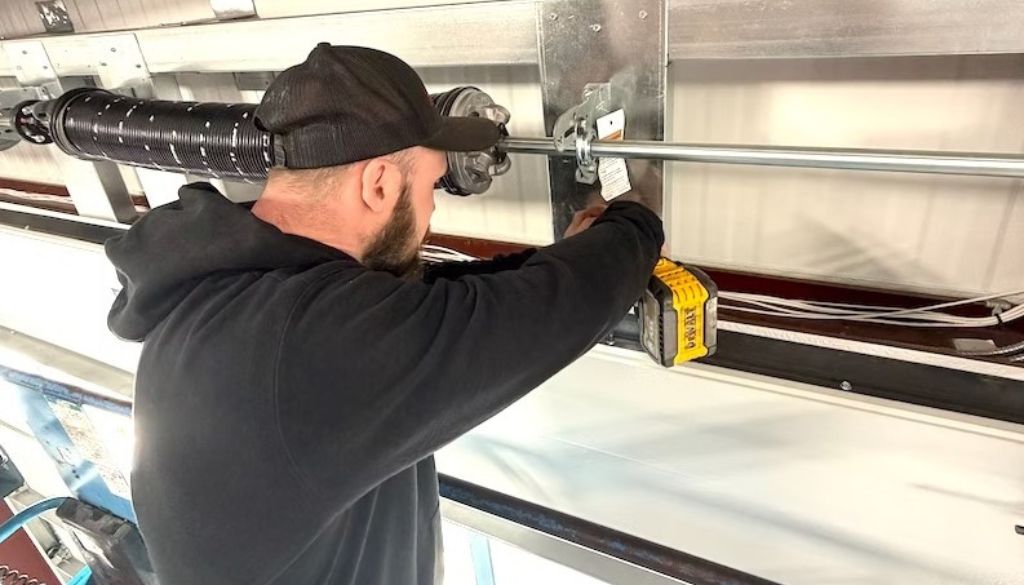
A good diagnosis usually starts with the whole system rather than the noisiest part. That means looking at door travel, visible alignment, balance behavior, and the age and condition of major components together.
When one worn spring leads to bigger trouble
A particularly important issue comes up when one spring breaks or reaches the end of its useful life before the other. Safety guidance and industry practice both point to the same concern: springs on the same door tend to wear similarly, and mismatched springs can create balance problems. For that reason, replacing both may be necessary when one fails.
That advice is not about overselling parts. It is about keeping the door balanced. If one spring is new and the other is significantly worn, the door may not carry load evenly. That can show up as uneven lift, twisting, poor closing, and renewed stress on the opener and running gear. A customer may think they saved money by replacing only the obvious failed spring, but if the door remains imbalanced, the callout often returns later as a different complaint.
This is one of those areas where trade-offs matter. In a perfect world, every repair would happen at the first sign of wear and all related parts would be assessed together. In real homes, budgets and timing are not always ideal. Even so, balance is one area where partial fixes can become false economy.
Local conditions can speed up wear
Environment matters more than many homeowners realize. Gold Coast service providers regularly note that salt air, humidity, and heat can affect garage door hardware and increase maintenance needs. That does not mean every coastal garage door is in trouble, but it does mean local conditions can accelerate wear patterns or make borderline problems show themselves sooner.
Salt air is hard on metal parts over time. Humidity can encourage sticking, swelling in surrounding materials, and inconsistent feel from day to day. Heat changes how a door behaves through the afternoon compared with early morning. None of those factors automatically cause a spring failure, but they can amplify the symptoms of a system that is already drifting out of balance.
That is why a door that seems acceptable in mild weather can start acting up during hot or humid periods. A homeowner may report, quite accurately, that the door only misbehaves some of the time. The intermittent nature of the problem does not make it minor. It often means the system is right on the edge, and environmental conditions are tipping it from manageable into noticeable.
Signs that point to spring wear rather than a simple nuisance
Some complaints do turn out to be minor adjustments or routine service items. Others deserve faster attention because they suggest the door is no longer balanced. The distinction matters for safety as much as convenience.
Here are a few signs that deserve a proper inspection:
The door looks uneven during travel or sits crooked when partly open. The opener sounds like it is working harder than it used to. The door closes inconsistently, stops short, or reverses after reaching the floor. One side of the door appears to carry more weight or move ahead of the other. The problem gets worse over weeks rather than staying the same.A door can still operate while showing several of these symptoms. That does not mean it is safe to keep using normally. It means the margin for trouble is shrinking.
Why do-it-yourself spring adjustment is a bad gamble
Many homeowners are comfortable tightening visible bolts, cleaning tracks, or replacing a remote battery. Those are sensible boundaries. Spring adjustment is not in that category. Safety sources are direct about the risk: garage door springs are under high tension and are dangerous to adjust or repair without proper training and tools.
That warning is worth taking literally. A spring system stores force. Unlike a loose handle or worn weather seal, it can release that force suddenly. The problem is not just the chance of injury during adjustment. An incorrect spring repair can also leave the door more imbalanced than before, which creates a second layer of danger once the door is back in use.
There is also a diagnostic issue. If a door is visibly out of line, it is tempting to assume the tracks need to be shifted or the opener limits need resetting. Sometimes goldcoastgaragedoorrepair.com.au those adjustments are part of a professional repair, but if they are made before the spring condition is understood, the door may be tuned around a faulty baseline. That often produces temporary improvement followed by another failure.
What a sensible repair approach looks like
The best repair work on a worn spring system is not just about swapping parts. It is about restoring balance and then checking whether other components were affected while the door was operating under strain.
In practice, that means a professional may look beyond the spring itself. If the door has been dragging or twisting, the tracks, rollers, hinges, and opener may need attention as well. This is why homeowners sometimes feel surprised by a broader service recommendation. They expected a single-part fix and got a system-level explanation instead. In many cases, that broader view is the honest one.
On the Gold Coast, garage door companies commonly offer repairs, servicing, installations, and replacement of parts such as motors, remotes, and springs. That range of work reflects how interconnected these systems are. A spring issue can expose an opener issue. An opener issue can highlight poor door balance. A basic service visit may uncover a spring that is near the end of its life before it fails outright.
This is also where judgment matters. Not every noisy door needs extensive repair. Not every opener under strain needs replacement. But when balance has been compromised, cosmetic fixes and guesswork rarely hold up for long.
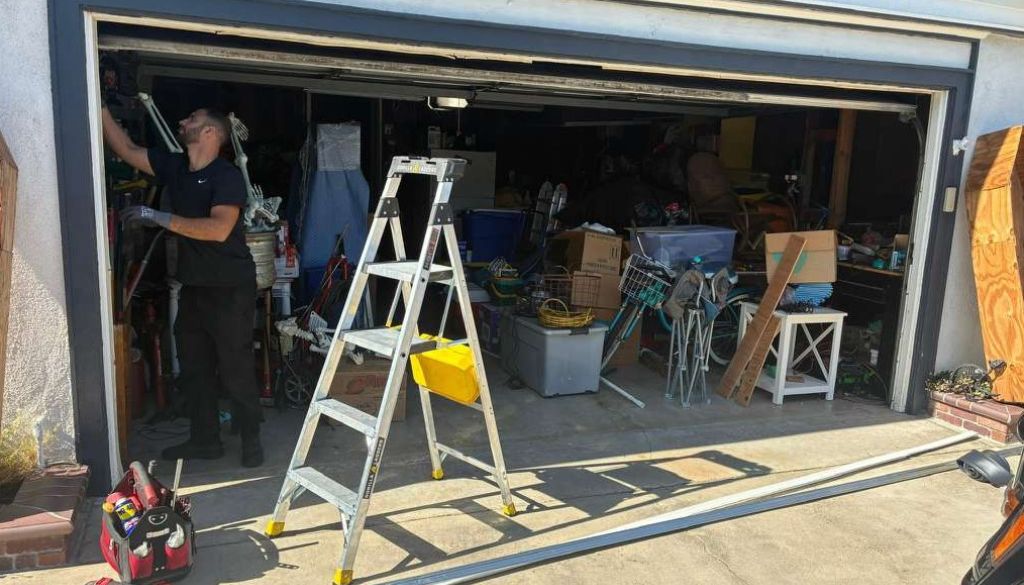
How maintenance helps keep small issues small
Preventive servicing sounds unglamorous, but it is often what separates a manageable adjustment from a sudden breakdown. At least one Gold Coast garage door business recommends professional servicing every 12 months to help prevent breakdowns and extend the life of the door and motor. That advice aligns with what many technicians see on the ground. Doors that are checked regularly tend to give more warning and suffer fewer secondary problems.
A yearly service does not guarantee that springs will never wear out, especially in harsh coastal conditions. What it does is improve the odds that wear will be caught before it turns into misalignment, poor closing, or opener stress.
A practical maintenance mindset usually includes a few simple habits:
Pay attention to changes in sound, speed, and smoothness rather than waiting for complete failure. Treat uneven closing or visible crooked travel as a mechanical issue, not a quirk to live with. Have the door professionally serviced on a regular schedule, especially in salty, humid, or hot environments. Ask for the whole system to be assessed if one major part, such as a spring or motor, is failing. Avoid do-it-yourself spring work, even if the problem appears straightforward.
Those habits are basic, but they are effective because they address timing. Most expensive garage door repairs are not dramatic single events. They are small warnings that went unanswered until more components were dragged into the problem.
Deciding whether you need spring work, opener work, or both
This is where homeowners often want a clean answer, and the truth is sometimes untidy. If your garage door is not closing properly, you may need spring work, opener work, track adjustment, or a combination. The symptom alone does not tell the full story.
A balanced door should not force the opener to do heavy lifting. If the opener is straining because the springs are worn, repairing only the motor may leave you with the same closing issue. On the other hand, if the springs have already caused prolonged stress, the opener may genuinely need repair or replacement as well. That is why the right question is not “Which part is bad?” so much as “What is causing the system to move out of balance?”
That system view helps explain why experienced technicians do not rush straight to one component. They watch the door move. They look for uneven travel. They consider the spring condition, the opener behavior, and any visible alignment drift together. That is how you avoid paying twice, once for the symptom and again for the cause.
The practical takeaway for homeowners
When spring wear begins, the first sign is rarely a dramatic break. More often it is a subtle loss of balance that shows up as crooked travel, rough motion, or a garage door not closing properly. Those symptoms are easy to misread, especially when the opener is the part making the noise.
The safest and most cost-effective response is to treat balance and alignment problems as a whole-door issue. Springs, tracks, rollers, and opener performance are linked. If one spring has failed or worn significantly, both may need replacement to avoid mismatch and ongoing balance problems. And because springs are under high tension, this is work for trained hands with the right tools.
If you are trying to fix garage door problems before they cascade into a larger repair, timing matters. Do not wait for the door to stop completely. A door that is still moving but no longer moving evenly is already telling you something important.