A garage door opener seldom obtains interest up until it starts appearing incorrect. A healthy and balanced unit has a familiar rhythm, a stable hum, a short mechanical smashing as the door begins to move, then quiet once again. When that audio changes to grinding, screeching, rattling, or a sharp knocking sound, something in the system has actually wandered out of placement or started to use. Sometimes the problem is minor and easy to fix. Various other times the noise is the initial indicator that the opener, the garage door motor, or the moving equipment is under stress and requires punctual attention.
Noise matters due to the fact that it commonly appears before a complete failing. That is particularly true in position where doors need to do more than open and close on demand. In https://coomera-qld4226-sj471.trexgame.net/garage-door-replacement-and-frame-upgrades-for-resilience cyclone-prone components of Queensland, garage doors are not simply a comfort, they are part of the building envelope. A loud opener might not appear immediate on a tranquil day, yet if the door battles, trembles, or binds, it can point to a weakness that ends up being extra severe throughout serious weather condition. A garage door that does not run smoothly is tougher to secure, tougher to trust, and most likely to endure damages when the weather condition transforms rough.
Start with the noise, not the guess
Different noises usually point to various troubles. A grinding noise usually suggests worn gears, a completely dry drive mechanism, or a damaged component inside the opener. A squeal might come from rollers, hinges, or a belt or chain that needs interest. A loud bang or bang-then-stop pattern can indicate a door that has stumbled, a spring issue, or a drive system that is combating resistance it need to not be combating. A rattling opener may be loose on its placing, especially if the sound is greatest at startup or shutdown.
The secret is not to think the opener is the only culprit. Oftentimes, the garage door itself develops the strain. A bent track, worn rollers, hard seals, or a tight joint can make the opener job more difficult than it should. That additional tons takes a trip straight right into the electric motor and transmission. If the opener is noisy, the door system needs to be inspected overall, not as isolated parts.
A quick way to narrow the problem is to pay attention thoroughly when the door steps by hand and when the electric motor runs. If the door is noisy even without the opener engaged, the fault is most likely in the door hardware. If the door moves smoothly by hand but the opener is loud, the trouble may be in the drive system, the motor, or the placing. That distinction saves time and helps stay clear of changing the wrong part.
What to inspect prior to you grab tools
Before opening up the housing or loosening up anything, disconnect the unit and evaluate the noticeable components. This is the component most home owners avoid, even though it commonly discloses the trouble within minutes. Dust, loose fasteners, aging rubber, and mild imbalance all make themselves recognized if you take a slow-moving appearance along the door course and the opener assembly.
A practical examination usually includes these checks:
- Confirm the door can move easily by hand and does not bind midway. Look for loosened screws, brackets, or opener mounts. Check the rails or tracks for damages, spins, or debris. Examine rollers, joints, and the drive chain or belt for wear. Listen for indicators of pressure from the motor case or transmission area.
If the garage door is heavy to raise by hand, that is an indication. An opener is created to help a well balanced door, not compensate for one that is out of balance. Requiring the motor to do that job is an usual reason for premature wear and unusual noise.
It is additionally worth checking the condition of the seals and the door framework. In coastal and storm-exposed areas, gaps around the door can let in wind-driven debris and moisture, which consequently speeds up wear on relocating parts. Preventative upkeep for garage doors is not just regarding silent procedure, it is likewise regarding keeping the entire opening secured and stable.
The opener itself might require attention
Once you have actually ruled out noticeable door equipment issues, focus on the opener. A lot of contemporary systems rely on a chain, belt, screw drive, or comparable system to move the door. Each kind has its own sound profile, however all of them can end up being louder when stress modifications, bolts loosen up, or inner parts use down.
A chain drive commonly establishes clatter if the chain droops or the mounting loosens. A belt drive can squeal or chirp if the belt is used or the sheave system is not running equally. A screw drive can generate a rough mechanical audio if the screw or carriage is dry or the unit has actually gathered gunk. Inside the electric motor real estate, used gears can make a crunching or grinding audio, particularly under load.
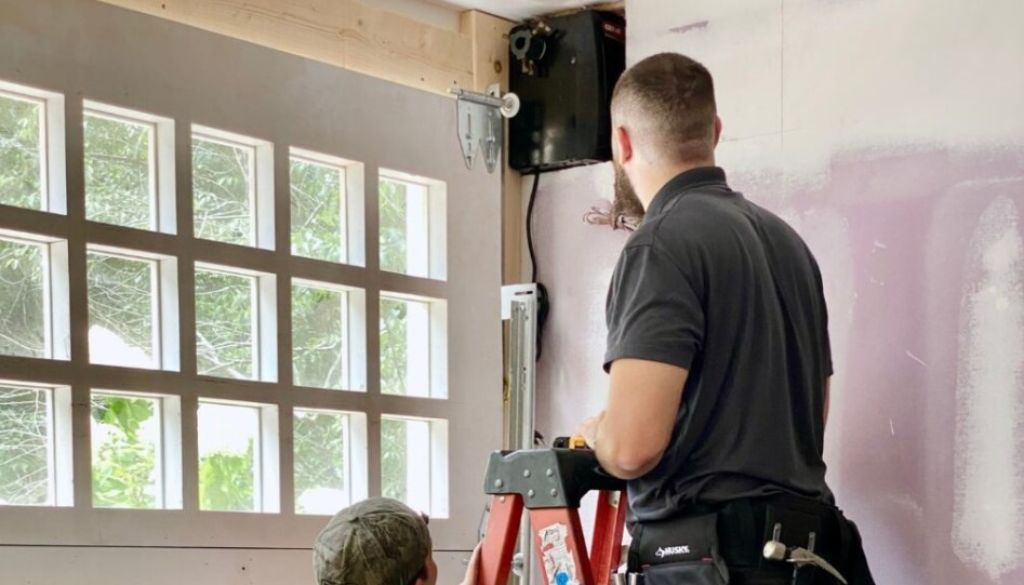
This is where judgment matters. A little functional sound is normal. An abrupt change is not. If the opener has become visibly louder over a short time, or if the noise is coupled with reluctance, trembling, or repeated stopping, the issue may be more than an easy lubrication problem. That is the point where numerous house owners make a decision to stop playing and arrange specialist aid, especially if the door is required daily or the weather is turning unstable.
When the noise is not simply noise
Some seems should be dealt with as warning signs instead of inconveniences. If the opener hums however the door hardly moves, the electric motor may be stressing versus a binding door or falling short inside. If the door jerks, shakes, or turns around suddenly, the system may be misaligned or the force settings might not be suitable. If a sharp snap comes with the noise, a springtime or wire concern is possible, and that is not something to treat casually.
Garage door springtimes and cords are under substantial stress. They are not the area for guesswork. If the sound appears to come from those parts, or if the door has become unbalanced, abnormally heavy, or difficult to raise, the more secure action is to quit using it and call for emergency situation repair work. A stuck or failing door can produce a safety and security concern in addition to a mechanical one, especially if the garage is a primary accessibility point to the home.
For home owners in cyclone-prone locations, that caution comes to be even more essential. Queensland assistance deals with garage doors as a known weak point in severe storms, which makes a noisy, jeopardized system more than a comfort problem. If the opener is currently battling, it might not give the reputable closure needed when extreme weather condition is approaching. A door that will certainly not shut correctly, or one that has noticeable damage, deserves immediate attention.
Repairing the usual causes of uncommon noise
The right repair work depends on the source of the audio. If the concern is loose placing hardware, retightening the opener's brackets can restore a steadier run. If the chain is as well loosened or also limited, the drive system might require change. If rollers or joints are completely dry or worn, they might require cleansing, lubrication, or substitute. If the rail is unclean or obstructed, getting rid of the course can make a surprising difference.
For numerous households, the easiest fixings are also the most beneficial. Eliminating debris from the track, tightening a couple of fasteners, and restoring fundamental lubrication can minimize noise promptly. That type of upkeep may appear modest, but it avoids the tiny problems that cause bigger stress. It likewise helps the opener relocate the door with less resistance, which extends the life of the electric motor and drive components.
Still, there is a line in between valuable upkeep and high-risk treatment. If you open the electric motor housing and find stripped equipments, damaged circuitry, or indications of burning, that is a different group of repair. At that point, the sound is no longer a routine upkeep problem, it is a sign that the opener may require component replacement or full system replacement. A worn-out electric motor can maintain making sounds for some time, but it typically does so by getting less reputable, not more.
A functional order of operations
A great repair process begins with the outside and functions internal. That keeps the job based and avoids unnecessary disassembly. It additionally assists you compare a door problem and an opener trouble, which is one of one of the most beneficial pieces of judgment in garage door work.
Disconnect power and check the door by hand for smooth movement. Check tracks, rollers, joints, and noticeable bolts for looseness or wear. Examine the opener's placing, drive system, and any signs of vibration. Address easy maintenance problems initially, such as debris, loosened hardware, or absence of lubrication. If noise persists, or if the electric motor sounds stretched, arrange specialist examination before the system fails.That series is not regarding being cautious for its own benefit. It mirrors exactly how these systems normally fail. Most noisy openers are not suddenly damaged. They are telling you the door is no more moving with the ease it as soon as had.
Why storm readiness changes the way you should think of repairs
On the Gold Shore and across Queensland, garage door solution is not just about comfort or sound reduction. It is tied to storm prep work and strength. Authorities readiness advice repeatedly stresses securing homes before serious climate, and garage doors belong to that photo. A door that rattles, flexes, or has a hard time under normal use is worthy of attention long prior to a cyclone warning is issued.
Queensland materials likewise keep in mind that garage doors should adhere to the appropriate wind-pressure score or be supported by a proper supporting system when a cyclone is approaching. That detail matters due to the fact that a garage door failure can influence more than the opening itself. It can damage bordering walls, ceilings, and roofing system cladding, transforming a single failure into a far more expensive fixing. A loud opener can be a very early idea that the door system is not in the very best condition to do its job under stress.
That is why preventative maintenance for garage doors has a different tone in storm-prone regions. You are not only attempting to silence a machine. You are checking that the closure is secure, correctly secured, and ready for severe weather condition. Changing a non-compliant or shabby door can improve durability, and also when replacement is not required, normal examination of spaces, seals, and door framing stays worthwhile.
Security, accessibility, and the price of delay
A garage door that makes unusual sound typically obtains endured longer than it needs to since it still functions most of the time. That is a hazardous routine. An opener that sounds undesirable may fall short at the most awful feasible moment, when you need the garage safe, the climate is turning, or your house is empty. Security-related style guidance in Queensland has actually long acknowledged the importance of solid, tamper-resistant door systems in safe applications. While a residential garage is not a high-security center, the concept coincides: a durable door and opener are harder to defeat and less likely to leave you exposed.
The cost of waiting can be little in the beginning and much bigger later on. A brace that only requires tightening today can turn into a distorted track tomorrow. A loud gear can become a seized motor. A door that is somewhat out of balance can overstress the opener until the whole system needs replacing. Fixing a garage door opener that makes unusual noise is normally less expensive prior to the signs spread out into the remainder of the system.
When substitute makes even more feeling than repair
Not every loud opener is worthy of a repair service attempt. If the device is old, the drive components are put on, and the motor is louder every month, a substitute might be the useful choice. The same is true when the door itself belongs to the issue, specifically if it no longer meets present storm-resilience expectations or has visible indications of structural weak point. In those situations, changing just one component might just acquire a brief reprieve.
The decision often boils down to the equilibrium in between expense, dependability, and danger. If the opener is making sounds because of a loosened brace or completely dry equipment, repair work makes sense. If the sound comes from inner wear in the motor or transmission, or if the door has actually duplicated positioning troubles, the economics shift. A substitute can revive quieter procedure, much better reliability, and in some circumstances, improved preparedness for extreme weather.
That trade-off is specifically essential for homeowners that rely on the garage as a main entrance factor. A system that functions only when taken care of gently is not a good system. It should open up, close, and seal without drama.
Keeping it quieter after the repair
Once the loud part has actually been remedied, the work is not fairly ended up. The very best method to maintain a garage door opener quiet is to decrease pressure before it builds. That implies normal monitoring, prompt lubrication where appropriate, and taking note of changes in the noise of the system. If the opener obtains louder over a couple of weeks, do not wait on a failure to verify your suspicion.
A practical maintenance routine is to evaluate the door seasonally, particularly prior to the tornado period starts. Check out the seals, track problem, mounting points, and the means the door acts at start-up and shutdown. If anything looks misaligned or feels larger than typical, repair it early. This is the functional side of exactly how to fix a garage door, due to the fact that the most effective fixing is typically the one that protects against a breakdown rather than reacts to it.
Quiet operation is not only pleasurable. It is evidence that the door, the opener, and the garage motor are sharing the tons effectively. When the system runs smoothly, the motor does much less work, the equipment lasts much longer, and the entire entrance factor is much more dependable.
A garage door opener that has actually begun to seem unusual is asking for attention. Often the answer is a small change or a little upkeep. Occasionally it points to much deeper wear, or to a door that no more should have to be trusted through another tornado season without review. Either way, the noise is useful details. The trick is listening early enough to act on it.